Water Heater Repair in Bedford Park, Bronx
Prompt diagnostic evaluation and repairs for residential gas, electric, and boiler-connected indirect water heaters across Bedford Park.
Hot water is essential for daily sanitation, cooking, and household comfort. When your water heater leaks, fails to maintain temperature, or suffers complete burner shutdown, our systematic diagnostic troubleshooting identifies the exact mechanical failure and restores safe, consistent domestic hot water.
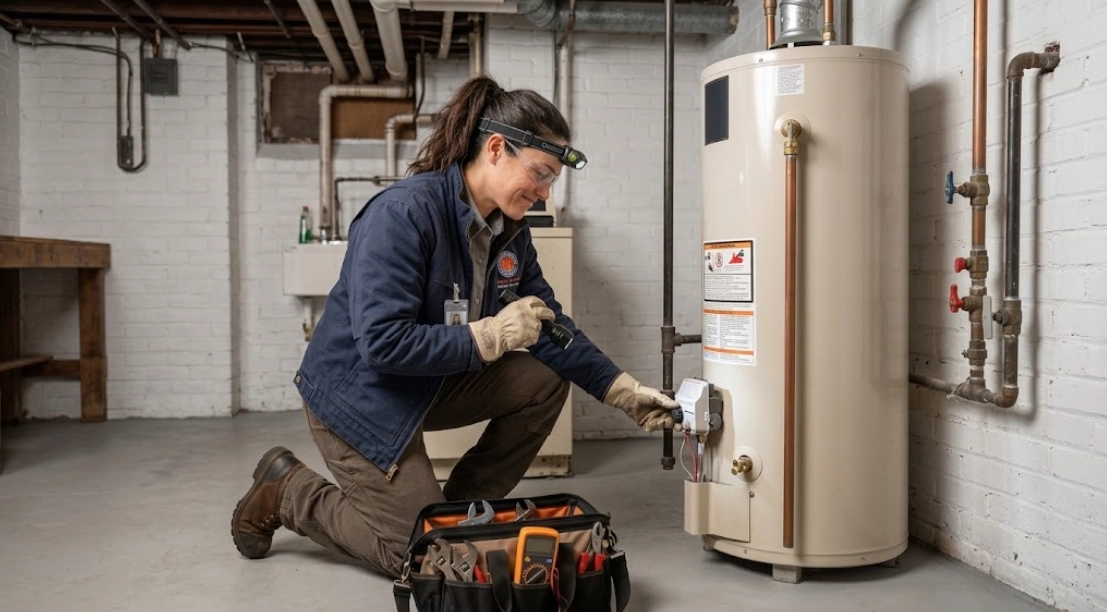
Domestic Hot Water Systems in Bedford Park Residential Buildings
Residential properties in Bedford Park utilize a variety of domestic hot water configurations depending on building age, physical basement space, and primary fuel sources. In classic two-family homes and brownstone walk-ups near Mosholu Parkway and Grand Concourse, homeowners frequently utilize atmospheric gas storage water heaters vented into existing masonry chimneys. In other properties, high-output electric storage tanks or indirect water storage tanks connected to the central heating boiler supply multiple apartments.
When unexpected issues arise—such as discovering a water heater leaking Bedford Park Bronx or facing sudden ice-cold morning showers—reliable water heater repair Bedford Park Bronx requires thorough troubleshooting across fuel supply lines, electrical safeties, and mechanical valves.
Common Symptoms and Diagnostic Procedures
Our technicians address a complete spectrum of water heating malfunctions across all major configurations:
No Hot Water
When facing a sudden no hot water repair Bedford Park Bronx emergency, we test thermocouples, pilot assemblies, electronic gas control valves, upper/lower heating elements, and high-limit cut-off switches to isolate why heating has stopped.
Water Heater Leaking
Puddles under the heater demand immediate investigation. We determine whether the leak originates from threaded pipe nipples, the brass drain valve, the thermal expansion tank, a discharging temperature and pressure (T&P) relief valve, or a breached internal tank lining.
Inconsistent or Lukewarm Water
Temperature fluctuations often point to mineral encrustation over heating elements, a failed dip tube dumping cold incoming water at the top outlet, or a miscalibrated thermostatic mixing valve failing to balance delivery temperatures.
Pilot Light Won—Tt Stay Lit
In atmospheric gas units, a pilot flame that immediately extinguishes when the control knob is released indicates a bad thermocouple, a clogged pilot orifice, a dirty flame sensor, or a tripped thermal cut-off switch in the sealed combustion chamber.
Rumbling and Popping Sounds
Violent bubbling or popping noises while the burner fires signal heavy mineral sediment accumulation. Trapped water boils under the sediment layer, creating mini-steam explosions that degrade the bottom tank head over time.
Discolored or Rusty Water
Brown or rusty water flowing exclusively from hot taps indicates that the sacrificial anode rod inside the tank has been completely consumed, leaving the steel tank wall exposed to rapid internal corrosion.
Types of Domestic Water Heating Systems We Service
Gas Water Heaters
Standard atmospheric and power-vented units require rigorous testing of gas supply lines, draft diverters, and thermocouple circuits. When performing gas water heater repair Bedford Park Bronx, combustion ventilation and draft hood draw are carefully checked to ensure exhaust gases evacuate safely through the chimney without backdrafting into the living space.
Electric Water Heaters
Common in properties where gas venting is unavailable, electric tank units rely on upper and lower immersion heating elements controlled by dual thermostats. Specialized electric water heater repair Bedford Park Bronx involves testing line voltage (240V), measuring element resistance in ohms to identify burned-out coils, and replacing faulty thermostats.
Indirect Water Heaters and Tankless Boiler Coils
Many older Bedford Park properties generate domestic hot water directly from the central heating boiler. An indirect system uses boiler water circulating through an internal heat exchanger coil inside an insulated storage tank, providing high recovery rates. Tankless coils immerse copper tubing directly inside the boiler water jacket. When coils calcify with hard water scale, hot water output drops dramatically, requiring chemical flushing or circulator zone replacement.
Repair vs. Replacement: What to Consider
When is it practical to repair a water heater, and when is replacement necessary? We provide honest, straightforward technical guidance:
- When Repair Makes Sense: Component failures—such as replacing an external gas control valve, installing a new thermocouple, replacing bad electric heating elements, repairing leaking pipe connections, or replacing a failed T&P relief valve—are cost-effective repairs that restore full functionality to tanks in sound physical condition.
- When Replacement Is Required: If the internal steel tank has ruptured and water is seeping out from the bottom seam or outer sheet metal jacket, no patch or temporary seal is safe or durable. Steel storage tanks cannot be welded or patched once breached; replacement is the only safe solution.
Preventative Maintenance Advice
To extend equipment lifespan and prevent sudden failures, we recommend an annual tank flush to drain settled mineral sediment from the bottom drain valve, testing the manual lever on the temperature and pressure relief valve, and inspecting the sacrificial anode rod every three to four years. If you notice dampness around basement walls or suspect water is escaping from hidden plumbing risers, explore our non-invasive leak detection service, or check our primary boiler repair in Bedford Park for boiler-connected hot water coils.
Frequently Asked Questions About Water Heater Repair
Helpful answers for Bedford Park homeowners, landlords, and superintendents.
What are the common causes of sudden loss of hot water?
In gas-fired water heaters, an extinguished standing pilot light, a defective thermocouple, an electronic ignition lockout, or a tripped thermal cut-off switch are the most common causes. In electric water heaters, tripped circuit breakers, failed upper or lower heating elements, or a tripped reset button on the high-limit thermostat prevent heating. If domestic water is supplied via an indirect coil on your heating boiler, an inoperable aquastat, failed mixing valve, or mineral-clogged internal copper coil is typically responsible.
Can a leaking water heater tank be repaired, or does it have to be replaced?
If water is leaking from pipe fittings, the cold-water inlet valve, the temperature and pressure (T&P) relief valve, or the bottom brass drain valve, the issue can usually be repaired by replacing the valve or resealing the pipe joint. However, if water is weeping directly through the tank jacket or pooling from the bottom seams of the steel tank, the internal glass lining has breached and the tank has rusted through, requiring replacement.
Why is my hot water running lukewarm or running out much faster than usual?
Lukewarm water or rapid depletion often indicates a broken internal dip tube. The dip tube directs incoming cold municipal water to the bottom of the tank to be heated. If the dip tube cracks or disintegrates, incoming cold water mixes directly with hot water at the top outlet, delivering lukewarm water to your fixtures. In electric units, a burned-out lower heating element produces identical symptoms.
Why does my water heater make popping or rumbling noises when heating?
Popping or rumbling sounds are caused by severe sediment buildup at the bottom of the tank. Over years of use, dissolved minerals and calcium settle into a dense layer over the burner or electric elements. Water gets trapped beneath this sediment blanket, overheats, and boils into steam bubbles that violently burst through the scale layer.
Restore Reliable Domestic Hot Water Today
From pilot light troubles to leaking valves and heating element replacements, call to arrange diagnostic service across Bedford Park.
Call (315) 202-8009 for Water Heater ServiceServing residential buildings across Bedford Park, Fordham North, and the Mosholu Parkway area.